
10 Creative Small Bedroom Ideas to Maximize Space and Style

Updated: Apr 19
Tiny bedrooms can be quite exasperating—particularly when it seems like they will inevitably end up messy no matter how many times they’re cleaned.
However, in reality, it’s usually not the lack of space itself but rather its effective use that counts.
In my observations, even tiny rooms could turn out spacious, practical, and rather stylish by making certain adjustments that don’t require purchasing any new things but only using existing ones differently.
This article will give tips that really help organize a bedroom regardless of its size and even show ways in which to decorate a small space properly.
Use Vertical Space Wisely
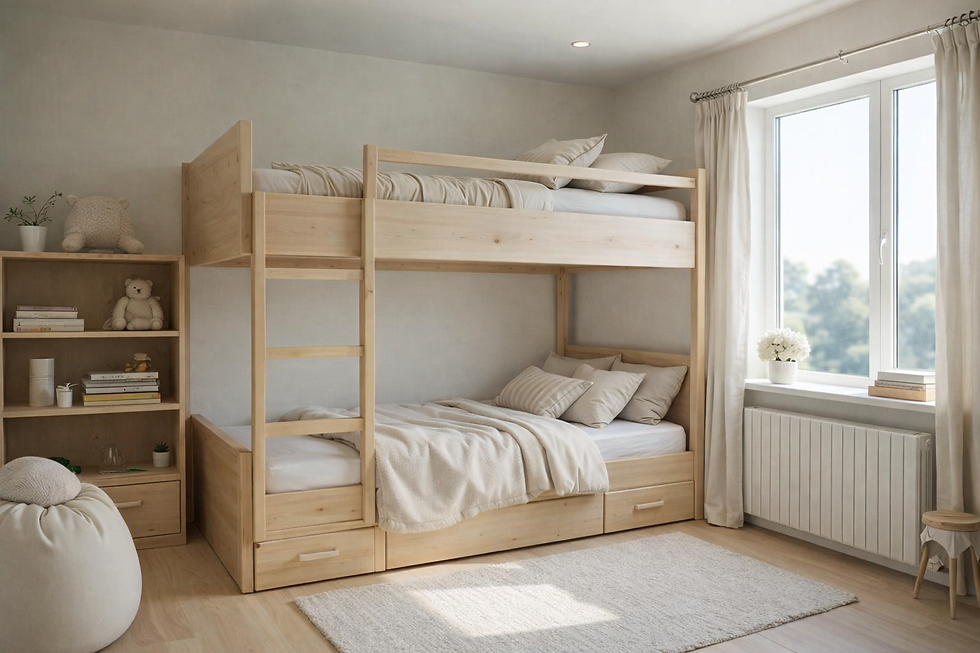
It is sometimes not about increasing storage but about reorganizing the existing space.
The layout is often more important than the number of pieces of furniture in a bedroom. Sometimes, all it takes is adjusting the position or orientation of your bed to create more walking room.
A useful layout idea is placing the bed against a wall or a corner. It may not be very conventional, but it will help make some extra space and improve accessibility.
Placing furniture along the walls, leaving the center open, makes the bedroom seem more spacious.
Fast layout tips:
Do not block access to areas where you regularly walk
Place furniture so that you do not have to reach across to access objects
Make sure you distribute furniture evenly throughout the bedroom
Leverage Your Vertical Space
When horizontal space is limited, utilize the vertical space in your bedroom.
Using a loft bed creates more floor space underneath where you could place a desk, shelves, etc.
High bookcases or shelves fixed to the wall will allow you to store your things off the ground and within easy reach.
Wall hooks or pegboards will be used for hanging your bags, jewelries, or hats, using the wall space for storage.
Choose Multi-Functional Furniture

In a small space, every piece of furniture must have a function. This is where multi-functional furniture really comes into play, as it allows you to maximize the space available to you without making it look messy or chaotic.
Small bedroom with multi-functional furniture, featuring a storage bed and fold-down desk. The key difference between multi-functional furniture and separate furniture for each purpose is the efficiency. With multi-functional furniture, the room can accommodate all your needs without being overcrowded.
Why it works:
Multi-functional furniture decreases the amount of stuff in the room, giving it a sense of openness and tidiness.
How to do it best:
Look for beds with drawers or storage spaces under the mattress.
Get desks that can fold out from the walls and back again when they’re not in use.
Buy ottomans or benches that double as seating and extra storage.
What to avoid:
Furniture that consumes too much space visually.
Items that are difficult to reach and utilize regularly.
Always choose furniture that you would actually use. If an item only looks good but doesn’t serve any purpose, then it will eventually become a source of clutter rather than functionality.
Keep the Color Palette Light and Bright
The use of the right color scheme in small rooms can be more effective than one might imagine. It can help create an impression of increased openness, tranquility, and comfort while avoiding feelings of claustrophobia and discomfort.
Bright colors naturally reflect more light, making a small bedroom appear more spacious and airy. Even when the lighting is not optimal, lighter colors will prevent a feeling of oppression.
In my experience, keeping all elements of decoration in a single palette helps achieve better results than mixing different colors on various surfaces.
How it works:
Light colors reflect more light and minimize visual weight.
Tips for implementation:
Apply pale white, beige, pastel, or light grey as the base of your palette.
Coordinate wall paint, bed sheets, and bulky pieces of furniture in light tones.
Introduce bright accents using pillows, floor mats, or art pieces.
Things to consider:
Avoid applying dark tones on major surfaces.
Do not introduce contrasting colors that may break up the visual cohesion.
Bonus tip:
If you enjoy darker shades, apply them to small objects instead of incorporating them into big pieces of furniture.
Use Mirrors to Create Depth
The role of mirrors in any room goes beyond decoration. For example, hanging a mirror opposite a window will help reflect daylight throughout the room and create an impression that it is larger than it really is. You can place mirrors opposite windows that have natural light coming in through them.
Think about getting mirrors for closet doors or for hanging against walls.
Also, you can use decorative mirrors to beautify the room while making it appear larger.
Mirrors bring light and depth, giving even small bedrooms a spacious look.
Optimize Closet and Storage Solutions
Small bedrooms often have little closet space, so using the space wisely becomes important.
Use slim and equal-sized hangers for better use of hanging space.
Include hanging racks or shelves within the closet space for footwear, jewelry, and folded clothing.
Use under-the-bed bins or vacuum bags for storing seasonal clothing outside the closet.
A wardrobe with sliding doors is an excellent choice since it uses less space than a wardrobe with doors that open outward.
Create Zones for VariousActivities
Even in a compact bedroom, dividing the area into zones where you sleep, dress, and relax will help you manage the space properly.
You can use rugs or rearrange furniture to divide the spaces visually.
One small armchair or a pouf will create an attractive zone for reading.
A wall-mounted desk or a collapsible table will make a good place to work without overcrowding your space.
Maximize Natural Light
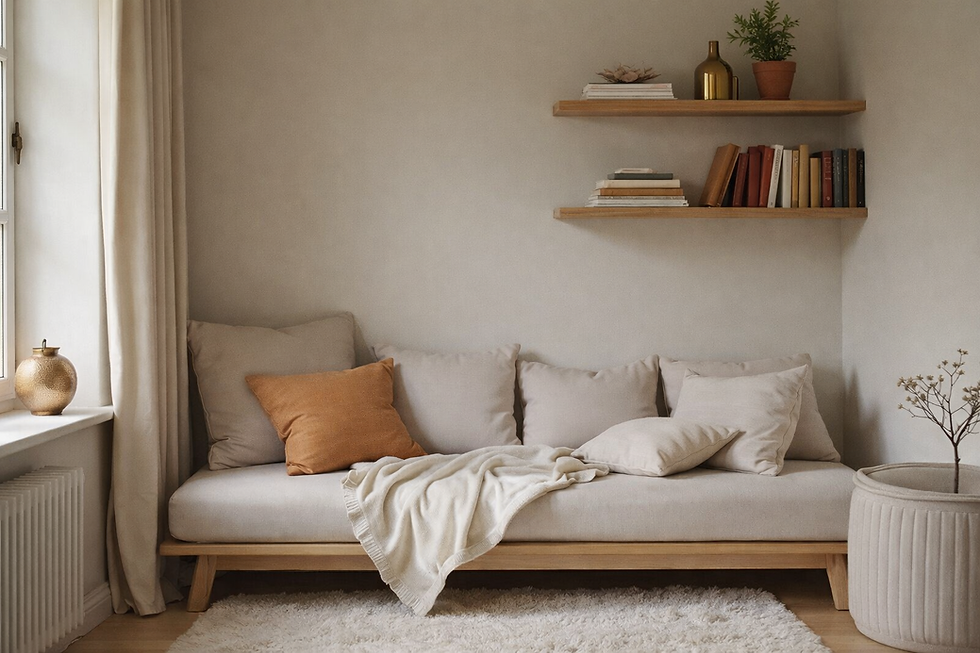
Natural light brings life to compact spaces and lifts your spirits.
Use translucent window coverings that don’t obstruct sunlight from coming in.
Do not choose thick curtains that would prevent windows from being visible; instead, use curtains that can be completely closed down.
Arrange your furniture in such a way that nothing obstructs the windows.
A bright space looks larger and more inviting.
Use Minimalist Decor
A cluttered space makes a small room feel cramped.
Opt for minimalism by keeping things neat and tidy.
Select a few statement pieces rather than multiple small pieces.
Always keep surfaces uncluttered and put away things that are not in use frequently.
Utilize minimalist furniture to make your room look airy.
Add Personal Touches with Art and Textiles
Bedrooms no matter how small should not lack personality.
Decorate with some of your favorite art pieces and pictures.
Add soft furnishings such as cushions or blankets for a comfortable feeling.
Decorations should blend with your color theme and not clutter your bedroom.
Keep Technology and Cords Organized
Cables can easily become tangled in a limited space.
Use cable organizers and cable clips to organize cables.
Mount the television onto the wall or use small TV stands.
Go for a wireless charger and a charging hub to limit cables.
Having a well-organized tech system will make your room look nice and comfy.
💸 Budget-Friendly Small Bedroom Upgrades
Add:
Under-bed storage (₹500–₹1500)
Wall shelves instead of cabinets
LED strip lighting
DIY decor swaps
🧠 Things People Unintentionally Do in Small Bedrooms
These are things that people usually do unintentionally that make the room look small:
❌ Placing too much furniture in the room
❌ Using big furniture in a small room
❌ Making the natural lighting inaccessible
❌ Over-accessorizing using small objects
❌ Failing to take advantage of vertical space
Improving any one of these factors will help.
❓ FAQs
How to make a small bedroom look larger?
With lighter color palettes, mirrors, and less furniture.
Which type of bed is the most suitable for a small room?
Storage beds or loft beds are ideal choices.
How to eliminate clutter from a room?
Make use of concealed storage options and throw out unnecessary things.
🏡 Closing Thoughts
Having a small bedroom doesn’t mean you’re confined to live in a cramped space. In reality, when planned correctly, a small bedroom becomes a much better place than a large room.
The reason is that with each element of design you use, you should be very deliberate and think about what it brings to the room.



Comments